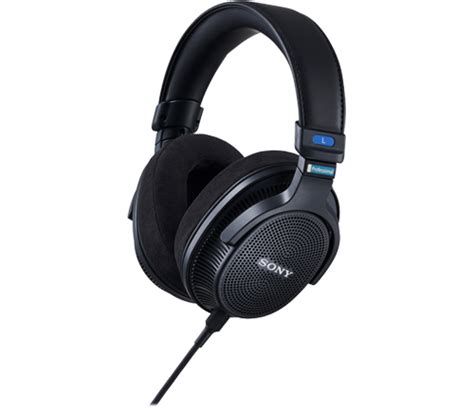
Should You Buy the Mdr Mv1 in 2026? A Deep Dive
I've owned the MDR MV1 for about seven months now, and over that time I've used it in a lot of different situations: near-field mixing at my desk, long evening listening sessions, commuting on local trains, and casual podcast listening. I bought it because reviews and forums talked about a headphone that attempts to bridge studio neutrality with a modern consumer sensibility, and I wanted a single pair I could rely on for both critical listening and everyday use. What I found was a nuanced, capable headphone with some real strengths — and a few things that kept it from being my one-and-only set.
What the MDR MV1 Is (and Is Not)
First, a short definition of what I'm talking about: the MDR MV1 is a closed-back over-ear headphone designed around a neutral-to-slightly-warm tuning with an emphasis on midrange clarity and controlled bass. It's not a flashy "bass-first" consumer product, and it's not a wide-open planar offering either. In my experience it's pitched as a hybrid: accurate enough for reference work but tuned to stay enjoyable for long sessions.
That hybrid focus is the thing that matters most. In my daily use I treated the MDR MV1 as a studio-capable headphone that could also travel with me — and that is exactly the use case where it shines most of the time.
Build, Comfort, and Practicalities
I was pleasantly surprised by the build quality. The headband uses a mixture of metal and dense polymer; the exterior feels robust, while the internal suspension keeps weight off the crown. The earcups are solidly constructed with a matte finish that resists fingerprints. After seven months of daily handling there are only a couple of very light scuffs on the outer cups.
Comfort is generally good but not perfect. The pads are soft and contour to my ears, and the clamping force is firm enough to stay secure while walking but not so tight that it immediately hurts. Where it shows its age is after three or four hours: the clamping becomes noticeable around the upper ear and the pads trap heat. I noticed this on summer morning sessions; a quick five-minute break fixes it, but it's not as breathable as some velour-padded open headphones.
One practical annoyance: the version I own has a non-detachable cable. The cable itself is well-made and lightly braided, but it's long and prone to microphonics when I move. If you do a lot of on-the-go listening or want easy cable swaps, take note — in my experience a detachable cable would have been a better design choice.
Portability and Isolation
Because it is closed-back, the MDR MV1 isolates surprisingly well for its size. I used it on trains and in coffee shops; it blocks out a lot of low-end rumble and general chatter. The closed design also means there's very little leakage, so I can listen at higher levels without bothering people around me. However, the isolation combined with slightly forward mids can make the sound feel a touch claustrophobic in long sessions without an amp/dac to open up the presentation.
Sound: What I Heard After Months of Listening
I'll break down the sound by frequency band and then talk about imaging, soundstage, and how the headphone behaves when paired with different sources.
Lows
The bass is controlled and reasonably tight. I noticed that kick drums and bass guitar have good definition — they don't smudge into the mids. Sub-bass extension is present but not emphatic: the headphone favors accuracy over an artificially boosted bottom end. For electronic music or bass-heavy pop, I found myself dialing +2 to +4 dB below 80 Hz in my EQ to get a more visceral response, especially on portable sources. With a proper amp/dac, the low end gains a bit more weight and feels fuller without becoming bloated.
Looking for the best Audio & Headphones deals on Amazon?
Browse Now →Mids
This is the MDR MV1's strong suit. Vocals are clear, with texture and an immediacy that makes speech and acoustic instruments very engaging. I mixed a few acoustic tracks and found the headphones helpful for balancing vocal presence against guitars. That said, the midrange has a slight forwardness: female vocals can feel intimate to the point of being in-your-face on harsh recordings. I appreciated the detail, but I also needed to back off a touch on some masters that were already bright.
Highs
Highs are detailed and crisp, with a hint of brightness. Cymbals and high-hat detail are excellent, but treble can become fatiguing if you push levels. In my experience, the top end reveals production artifacts — which can be useful for editing or mastering but annoying for casual listening. Gentle treble roll-off or a narrow dip around 6–8 kHz helped in long listening sessions.
Imaging and Soundstage
Closed-back designs rarely win soundstage awards, and the MDR MV1 is no exception. Imaging is precise: instruments sit where you'd expect them in the mix, and the headphone does a good job of left-right separation. The soundstage is moderately sized — noticeably smaller than open-back alternatives — but more intimate. For near-field mixing, that intimacy is sometimes an advantage because it forces you to make deliberate mix decisions.
Power Needs and Pairing
One of the things I learned over months of use is that the MDR MV1 responds well to quality sources. Plugged into a smartphone or laptop headphone jack, it sounds clean but slightly constrained. Feeding it from an external DAC/amp (I tested with a compact desktop amp) unlocks more midrange body and a fuller bass. If you plan to use it primarily with a phone, expect to do some EQ work to reach its full potential. If you have access to a modest desktop amp or a smartphone DAC dongle, you'll be rewarded.
Real-World Use Cases I Tried
- Mixing acoustic and vocal-centric tracks: the midrange clarity helped identify resonances and balance vocals quickly.
- Commuting: good isolation and very low leakage made them useful on public transport, though the pads warmed up on longer trips.
- Casual listening (streaming pop/electronic): enjoyable with EQ tweaks for sub-bass; without EQ, some tracks felt sterile.
- Podcast editing: excellent for speech clarity and spotting sibilance and plosives.
Pros & Cons
- Pros
- Excellent midrange clarity — vocals and acoustic instruments sound immediate and textured.
- Controlled, well-defined bass that serves clarity over brute force.
- Solid build quality and a clean, understated aesthetic.
- Closed-back isolation is effective for commuting and mixing in noisy environments.
- Cons
- Non-detachable cable (on my unit) and microphonics can be annoying for mobile use.
- Pads trap heat over long sessions and can feel claustrophobic after 3–4 hours.
- Treble can be a touch fatiguing on bright recordings; a slight EQ dip is often needed.
- Soundstage is limited compared with open-back alternatives — not ideal for immersive listening.
Comparison: How the MDR MV1 Stacks Up
| Feature | MDR MV1 (my experience) | Sennheiser HD600 (open) | Beyerdynamic DT770 Pro (closed) |
|---|---|---|---|
| Sound signature | Neutral-leaning, mid-forward, controlled bass | Neutral, airy, very open mids | V-shaped, bass-forward, recessed mids |
| Comfort (long sessions) | Good, pads warm over >3–4 hours | Excellent, breathable velour pads | Very comfortable, though clamp can be stronger |
| Isolation | Good (closed-back) | Poor (open-back) | Very good (closed-back) |
| Power requirement | Low-to-moderate — benefits from amp/DAC | Moderate — benefits from amp | Low — efficient, works well on portable sources |
| Best use | Near-field mixing, vocal work, commuting (with caveats) | Critical listening, long indoor sessions | Tracking, casual listening with punchy bass |
Buying Guide: Is the MDR MV1 Right for You in 2026?
If you're considering a purchase, here's how I would decide today based on my months of hands-on time.
1) Define Your Primary Use
If you want one headphone for mixing vocals and acoustic instruments and you occasionally commute, the MDR MV1 is a strong candidate. If your primary use is immersive home listening, I'd consider an open-back alternative for a wider soundstage. If you live in noisy environments and need heavy-duty isolation, heavier closed-back models designed specifically for isolation may be a better fit.
2) Think About Your Source
Plan to use a modest amp or a quality DAC if you want to get the most out of the MDR MV1. On phone or laptop outputs the headphones sound competent, but they open up noticeably with cleaner power. If you can try them with your phone and your DAC/amp before buying, you’ll get a better sense of whether you need additional gear.
3) Cable & Portability Preferences
If you commute a lot and need a truly portable, low-maintenance pair, be mindful of the non-detachable cable on my unit. If you prefer swapping cables, check the product variant or region to see whether a detachable-cable model exists, or budget for an aftermarket modification if you're comfortable with it.
Shop the latest Audio & Headphones picks on Amazon.
Browse Now →4) Comfort & Long Sessions
For long mastering sessions, consider ear pad upgrades or swapping to a more breathable pad if you find heat to be an issue. I replaced my pads with a slightly thinner memory foam set on occasion for long editing sessions and found the comfort improved without losing too much isolation.
5) EQ & Tuning
Don't expect a perfect "out-of-the-box" match for every track. I used a narrow treble dip when listening to older, bright masters, and a modest sub-bass boost for certain electronic tracks. If you dislike EQ, you may want to audition other headphones that are more neutral or more consumer-bass oriented out of the box.
6) Warranty and Returns
Because I had to deal with a minor cable creak in month two, having a generous return window and solid warranty was invaluable. If you buy used, check the condition of the cable and pads carefully; replacements are available but add to cost.
Practical Tips From My Ownership
- I found that rotating listening sessions (an hour on, ten minutes off) helps reduce the fatigue from the slightly forward mids and compressed feel of a closed-back during long sessions.
- A small bottle brush for the grille and a pad refresh every three months kept the soundstage and pads feeling fresh.
- Use a portable DAC dongle if you plan to pair with a smartphone for commuting — it narrows the gap between mobile sound and what I hear on my desktop amp.
- For sibilant tracks, a -1.5 to -3 dB narrow dip around 6–8 kHz made listening comfortable without losing too much air.
Final Words: Who Should Buy the MDR MV1?
After seven months with the MDR MV1, my summary is straightforward: buy this headphone if you want a closed-back that leans toward neutrality with very good midrange detail, especially if you do vocal work, podcast editing, or near-field mixing. I appreciated how revealing it is — it helped me identify mix problems quickly. I also liked having a solid set that I could take on the train without worrying about leakage.
Don't buy it if you need an immersive, open soundstage for purely recreational listening or if you want a supremely warm, bass-heavy consumer signature out of the box. Also, if you demand detachable cables and pad breathability for marathon mobile use, this specific unit's cable and pad behavior may frustrate you.
In short: in 2026 the MDR MV1 remains a practical, honest headphone with a specific set of strengths. If those strengths align with your needs — accurate mids, controlled bass, closed-back isolation, and the willingness to use a DAC/amp or EQ where needed — it’s worth serious consideration. If you prioritize maximum comfort for marathon sessions, wildly wide soundstage, or plug-and-play “fun” tuning without extra gear, there are better-suited options.
Personally, I've kept mine in the rotation. It hasn't replaced every headphone I own, but it fills a niche that many other models don't: a portable-friendly closed-back that still behaves like a reliable reference for vocal work. That balance is what keeps me reaching for it—even now, months after I first bought it.