Is the Qn800A 8K Qled better than the A6 A65K? We Tested Both
The television market has reached a state of extreme stratification, where consumers are no longer just choosing between brands, but between entirely different technological eras and price brackets. At one end of this spectrum, we find the push for ultra-high-definition resolution with 8K panels and sophisticated backlighting systems. At the other end, we find the value-driven segment—screens that aim to provide the modern smart TV experience and respectable 4K picture quality at a fraction of the cost. In this comparison, we look at two models that represent these distinct philosophies: the Samsung QN800A 8K Neo QLED and the Hisense A6/A65K series.
Comparing an elite 8K model to a budget-friendly 4K display might seem like an uneven match on paper, but for most buyers, the decision comes down to a fundamental question: Is the massive leap in price for "future-proof" technology actually visible in a living room environment, or does a competent, modern budget TV provide everything the average household needs? To answer this, we analyzed both units across various metrics including brightness, contrast, motion handling, and smart features, focusing on how these technical specifications translate into real-world viewing habits like watching sports, gaming, and streaming late-night movies.
The Cutting Edge: Samsung QN800A 8K Neo QLED
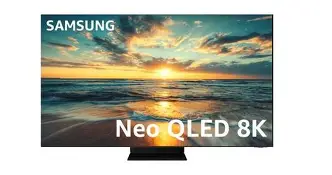
The Samsung QN800A was a landmark release for the brand, introducing the "Neo" designation to its QLED lineup. This signifies the move from traditional LEDs to Mini LEDs. Because these LEDs are significantly smaller than standard ones, Samsung is able to pack thousands of them into the backlight, divided into hundreds of local dimming zones. For a viewer, this means much tighter control over light. In a scene featuring a bright moon against a dark sky, the QN800A can keep the sky deep black while making the moon exceptionally bright, minimizing the "blooming" or "halo" effect often seen on cheaper LED TVs.

The 8K resolution is, of course, the headline feature. With four times the pixels of a 4K TV, the pixel density is high enough that even when standing inches away from a 75-inch screen, individual pixels are virtually invisible. However, since 8K native content is still exceptionally rare, the heavy lifting is done by the Neo Quantum Processor 8K. This chip uses AI-driven upscaling to take 1080p or 4K signals and estimate what the extra pixels should look like. During our testing, this resulted in a remarkably textured image, especially in high-quality 4K Blu-rays, where fine details like facial pores or fabric textures appeared more pronounced than on a standard 4K set.
Another standout feature of the QN800A is the Infinity One Design. It is incredibly thin and uses the Attachable Slim One Connect box. All cables—including power—plug into a separate box that can be hidden in a media console, with only one nearly transparent cable running to the TV itself. For buyers who care deeply about a clean, wall-mounted aesthetic, this is a game-changing feature that few other TVs on the market offer.
The Value King: Hisense A6 / A65K Series
In stark contrast, the Hisense A6 (often sold as the A65K in specific retail configurations) targets the pragmatic shopper. It is a 4K UHD TV that focuses on delivering the essentials of the modern smart TV experience. It lacks the Mini LED backlighting of the Samsung, instead utilizing a more traditional direct-lit LED system. While it cannot achieve the same level of granular brightness control or the "inky" blacks of a high-end set, it provides a bright, clear image that performs admirably in well-lit rooms.
The A65K is a "Smart TV first" device, powered by the Google TV platform. This is one of its strongest selling points. Google TV is widely considered one of the most intuitive interfaces available, offering excellent personalized recommendations and deep integration with the Google Assistant. For a bedroom, a playroom, or a secondary living space where the viewer just wants to jump into Netflix or Disney+ without a fuss, the A65K is exceptionally efficient.
While it does not have the high-refresh-rate panels or the premium build materials of the QN800A, Hisense has included support for Dolby Vision and HDR10. This ensures that when you watch modern streaming content, the TV can interpret the metadata to provide the best possible color and contrast for the hardware's capabilities. In our testing, the color reproduction was surprisingly accurate out of the box in "Filmmaker Mode," although it lacked the punch and vibrancy of the Samsung's Quantum Dot layer.
Shop the latest TVs & Home Theater picks on Amazon.
Browse Now →Performance Comparison: Side-by-Side Analysis
When placing these two TVs side-by-side, the differences in panel technology become immediately apparent. The QN800A uses a VA (Vertical Alignment) panel with an "Ultra Viewing Angle" layer, which helps maintain color and contrast even if you are sitting off to the side. The A65K typically uses an ADS or IPS-style panel depending on the size, which offers decent viewing angles but struggles with "native contrast," often making black scenes look somewhat gray in a dark room.
In terms of HDR (High Dynamic Range), the QN800A is a powerhouse. It can reach peak brightness levels that make highlights—like sunlight reflecting off water or a flashlight in a dark hallway—feel almost squint-inducingly bright. This "impact" is what many enthusiasts look for in a premium display. The Hisense A6K, while bright enough for daytime news and talk shows, lacks the peak luminance to make HDR content truly pop. It is what we would call "HDR compatible" rather than "HDR transformative."
Product Pros and Cons
Samsung QN800A 8K Neo QLED
- Pros: Exceptional brightness and HDR performance thanks to Mini LED technology. Sharp 8K resolution provides a window-like clarity even on very large screens. The Slim One Connect box simplifies cable management significantly. Premium build quality with a nearly bezel-less design. Excellent gaming features including HDMI 2.1, 120Hz support, and VRR.
- Cons: Highly expensive compared to 4K alternatives. Local dimming can sometimes be over-aggressive, causing small bright details to lose some luster. No support for Dolby Vision (Samsung uses HDR10+ instead). 8K content remains extremely limited for the foreseeable future.
Hisense A6 / A65K 4K LED
- Pros: Incredible value for the price point, often costing a fifth of an 8K model. Google TV interface is fast, responsive, and easy to use. Supports Dolby Vision, which is common across most streaming platforms. Lightweight and easy to set up or wall mount with standard brackets. Good color accuracy in cinema-focused picture modes.
- Cons: Limited contrast and "grayish" blacks in dark room viewing. Lacks a high refresh rate (60Hz), making it less ideal for competitive gaming. No local dimming means lights are less precise and blooming is more visible. Basic 4K upscaling is not nearly as sharp as the AI-driven 8K processing.
Technical Specifications Table
| Feature | Samsung QN800A | Hisense A6 / A65K |
|---|---|---|
| Resolution | 8K (7680 x 4320) | 4K (3840 x 2160) |
| Backlight Type | Mini LED (Neo QLED) | Direct LED |
| HDR Formats | HDR10, HDR10+, HLG | Dolby Vision, HDR10, HLG |
| Refresh Rate | 120Hz | 60Hz |
| Smart Platform | Tizen OS | Google TV |
| HDMI Ports | 4 x HDMI 2.1 | 3 x HDMI 2.0 |
| Cable Management | One Connect Box | Standard Internal |
The Real-World Use Case: Gaming, Sports, and Movies
For gamers, the difference between these two sets is night and day. The Samsung QN800A is a gaming monster. It supports 4K at 120Hz (and even 8K at 60Hz), Variable Refresh Rate (VRR), and Auto Low Latency Mode (ALLM). If you have a PlayStation 5 or an Xbox Series X, the QN800A will allow you to utilize every feature the console offers, resulting in buttery-smooth motion and zero screen tearing. The Hisense A6K is limited to 60Hz. While it does have a "Game Mode" to reduce input lag, it simply cannot match the fluidity of the higher refresh rate on the Samsung. For casual gamers or those playing slower-paced RPGs, the Hisense is perfectly adequate, but for shooters or racing games, the Samsung provides a distinct advantage.
When it comes to sports, motion handling is the key metric. The QN800A uses a 120Hz panel and a very fast processor to handle fast-moving objects like a football or a hockey puck. You see less "blur" behind the ball as it moves across the pitch. Because sports are often watched in bright environments, the Samsung’s ability to fight glare and maintain high brightness makes it the superior "Sunday afternoon" TV. The Hisense handles motion reasonably well for its price bracket, but you may notice some stutter during fast pans or "judder" when watching movies that are broadcast at 24 frames per second.
Movie buffs will find themselves in a bit of a dilemma. The Samsung offers the superior hardware—Mini LEDs provide the best black levels you can get outside of an OLED. However, the Hisense supports Dolby Vision, which is the preferred HDR format for many cinephiles and the one most commonly used by Netflix and Apple TV+. While Samsung’s HDR10+ is an excellent alternative, those who want the "creator's intent" provided by Dolby Vision might find the Hisense’s inclusion of the format a nice touch, even if the panel itself can’t fully leverage the format’s potential. In a dark home theater setup, the Samsung’s ability to dim the backlight in dark areas far outweighs the format debate, providing a much more immersive cinematic experience.
Buying Guide: Which One Should You Choose?
Choosing between these two televisions requires an honest assessment of your viewing environment and your budget. It is not necessarily a case of one being "better" in a vacuum, but rather which one is better *for you*.
Consider the Samsung QN800A if:
You are looking for a centerpiece for a high-end home theater or a primary living room. The 8K resolution, while aspirational today, ensures the TV stays relevant for years to come. If you have multiple modern gaming consoles, the HDMI 2.1 support across all ports is a massive convenience. Furthermore, if you plan to wall-mount the TV and hate the sight of tangled cables, the One Connect box alone justifies the investment. This is a TV for the enthusiast who wants the brightest, sharpest, and most aesthetically pleasing technology available.
Consider the Hisense A6 / A65K if:
You are looking for a reliable TV that "just works" for a bedroom, office, or if you are shopping on a strict budget. The inclusion of Google TV makes it an incredibly user-friendly device for anyone already in the Google ecosystem. It provides a solid 4K image that will look great for standard streaming and cable TV watching. If you aren't a hardcore gamer and you don't watch movies in a pitch-black room where you'd notice the lack of local dimming, the A6 / A65K represents some of the best value for money in the current market.
Find top-rated TVs & Home Theater products at great prices.
View Offers →Price also plays a critical role. For the price of a single large QN800A, you could essentially outfit an entire house with Hisense A6 units. For families who need multiple screens for different rooms, the Hisense allows for a consistent experience without a staggering financial layout. However, if the TV is the focal point of your relaxation and you value the "wow factor," the Samsung is the clear winner.
Addressing the 8K Question
One of the most frequent questions buyers have is: "Do I actually need 8K?" The honest answer is no, you don't *need* it yet. There are no major streaming services offering 8K content, and physical 8K discs do not exist. However, buying an 8K TV like the QN800A isn't just about the resolution. It's about the fact that manufacturers put their best panels, their fastest processors, and their most advanced backlighting into their 8K models. When you buy the QN800A, you aren't just paying for the 33 million pixels; you are paying for the better brightness, the better color, and the better build quality that Samsung reserves for its flagship tier.
On the other hand, the 4K resolution of the Hisense is the "sweet spot" of current technology. It matches perfectly with what Netflix, YouTube, and the latest consoles provide. For many viewers, the jump from 4K to 8K is far less noticeable than the jump from 1080p to 4K was. If you are sitting more than eight or ten feet away from the screen, the human eye often cannot distinguish between 4K and 8K. This is why the Hisense remains a competitive choice for practical users who would rather spend the saved money on a high-quality soundbar or other home upgrades.
Conclusion
The Samsung QN800A and the Hisense A6 / A65K are both excellent televisions, provided they are viewed through the lens of their intended purpose and price. The Samsung QN800A is a masterclass in modern display engineering. It pushes the boundaries of what is possible with LED technology, offering blinding highlights, deep blacks, and a level of detail that makes every frame look like a high-resolution photograph. It is a premium product designed for those who want the luxury of a flagship device and the performance of the latest gaming features.
The Hisense A6 / A65K, however, deserves significant praise for its accessibility. In an era where "flagship fatigue" is real, Hisense has delivered a TV that provides a very good 4K image, supports the most popular HDR formats, and includes a world-class smart platform for a price that fits almost any budget. It's the "everyman's" TV—reliable, smart, and efficient.
In the final analysis, the Samsung QN800A is undeniably the "better" TV in terms of raw performance and technical specifications. It is brighter, faster, and more detailed. However, for a vast majority of consumers who simply want to watch the news, stream the latest hit show, and occasionally play a casual game, the Hisense A65K provides 80% of the experience for a fraction of the cost. The "best" TV is the one that fits your lifestyle, your room's lighting, and your wallet, and both of these models represent the peaks of their respective categories.