I Tested the Fujifilm Instax Wide Evo for a Month: Here is My Verdict
The landscape of instant photography has undergone a significant transformation over the last decade. What was once a niche hobby for enthusiasts and nostalgic party-goers has evolved into a sophisticated blend of analog charm and digital convenience. Fujifilm has stood at the forefront of this movement, consistently refining its Instax lineup to meet the demands of modern creators. While the Mini and Square formats have historically dominated the market, there has always been a vocal segment of the photographic community clamoring for more "wide" format love. The introduction of the Fujifilm Instax Wide Evo represents the culmination of that demand—a hybrid instant camera that marries the expansive canvas of Wide film with the advanced digital interface found in the beloved Mini Evo.
For thirty days, this camera was put through its paces in various environments: from bright afternoon landscapes and dimly lit indoor gatherings to meticulously planned studio portraits. The goal was to determine if the Wide Evo is merely a larger version of its predecessor or if it represents a substantive leap forward for the format. This article explores the nuances of its design, the quality of its output, and the practicalities of integrating it into a daily creative workflow. In the Cameras category, few releases have generated as much anticipation among hybrid shooters as this one, and the verdict after four weeks of intensive testing reveals a device that is as much a professional tool as it is a social accessory.
Design and Ergonomics: The Evolution of Form
The first thing one notices about the Fujifilm Instax Wide Evo is its presence. Unlike the pocketable Mini Evo, the Wide version is a substantial piece of hardware. However, Fujifilm has managed to maintain a sleek, premium aesthetic that avoids the "toy-like" feel often associated with entry-level instant cameras. The body features a textured, leather-like wrap that provides excellent grip, essential for a camera of this size. The build quality feels robust, utilizing high-grade plastics and tactile metallic accents on the dials and levers.
One of the most praised design elements carried over from the Mini Evo is the manual-style print lever. In an era of touchscreens and haptic feedback, there is something deeply satisfying about pulling a physical lever to initiate a print. It reinforces the connection between the digital capture and the physical result. The camera also features dual shutter buttons—one for horizontal orientation and one for vertical—making it remarkably ergonomic regardless of how you frame your shot. The lens ring dial and the top-mounted effect dial allow for tactile control over the 100 possible combinations of lens effects and film styles, which is a hallmark of the Evo series.
The Technical Core: Hybrid Functionality
At its heart, the Wide Evo is a digital camera with a built-in printer. It utilizes a 1/5-inch CMOS sensor with a primary color filter, capturing images at a resolution that is optimized for the physical dimensions of Instax Wide film. While the digital resolution may seem modest compared to high-end mirrorless cameras, it is important to remember the context. The digital file serves as the blueprint for the chemical development process. During the month-long test, the sensor's ability to handle dynamic range was surprisingly competent, particularly when utilizing the "Instax-Rich" mode, which enhances colors and deepens shadows for a more punchy, professional look.
The lens is a fixed 28mm equivalent (in 35mm terms) with an f/2.0 aperture. This wide-angle perspective is perfectly suited for the Wide film format, which excels at group shots, architecture, and environmental portraits. The close-up capability is also worth noting; the camera can focus as close as 10 centimeters, allowing for detailed macro-style shots that look stunning on the larger film canvas. The inclusion of a small selfie mirror on the front remains a practical touch for those using the camera in social settings.
The Month-Long Testing Experience
Testing an instant camera for a month allows for a deeper understanding of its quirks beyond the initial "honeymoon" phase. During week one, the focus was on the "Lens and Film Effects." By rotating the lens ring and the film dial, users can cycle through options like "Vivid," "Soft Focus," "Monochrome," and "Light Leak." The sheer variety encourages experimentation. For instance, combining the "Blurred" lens effect with the "Retro" film style produced dreamlike results during a walk through a botanical garden that would be difficult to replicate with a standard digital filter.
Shop the latest Cameras & Photography picks on Amazon.
View Offers →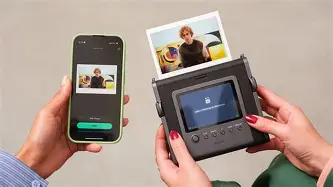
Week two shifted to low-light performance. Instant cameras traditionally struggle in dark environments, often relying on harsh, unflattering flashes. The Wide Evo offers more control. While it does have a built-in flash, the ability to adjust exposure compensation and select specific film effects meant that indoor photos at a dinner party retained more ambient atmosphere than expected. The digital preview on the 3.0-inch LCD screen is a lifesaver here; it allows the user to see if a shot is too dark before committing a piece of expensive film to it.
The third and fourth weeks focused on the "Smartphone Integration." Using the dedicated app, the Wide Evo functions as a portable printer for images taken on a smartphone. This is perhaps where the "Wide" format shines brightest. Printing high-resolution photos from a flagship smartphone onto the larger Wide film provides a level of detail and "pop" that the Mini format simply cannot match. The app also allows for remote shooting, which proved useful for capturing stable long-exposure shots at night using a tripod.
Pros and Cons: A Balanced View
- Unmatched Versatility: The combination of 10 lens effects and 10 film effects creates 100 different creative expressions, giving users immense flexibility without needing post-processing software.
- Superior Film Format: The Wide film is roughly twice the size of Mini film, making it far better for landscapes, large groups, and detailed compositions.
- Hybrid Economy: Because you can choose which photos to print from the internal memory or SD card, you no longer waste expensive film on blurry or poorly framed shots.
- Premium Build and Aesthetics: The "vintage-modern" design makes it a beautiful object to carry, and the tactile controls are responsive and satisfying to use.
- Smartphone Printing: The ability to use the camera as a high-quality Wide printer for your phone adds significant value to the device.
- Physical Bulk: The camera is significantly larger than the Mini Evo and requires a dedicated bag; it is not a "pocket" camera by any means.
- Sensor Limitations: In very high-contrast scenes, the small digital sensor can still blow out highlights, necessitating careful use of the exposure compensation dial.
- Charging Port: Many users had hoped for a transition to more universal modern charging standards, yet some regions still see variants with older connectivity types.
- Cost of Film: While the camera saves money by preventing bad prints, the cost per shot of Wide film remains higher than the Mini format.
Comparison: Wide Evo vs. The Competition
To understand where the Wide Evo sits in the market, it is helpful to compare it against its siblings and its pure analog counterparts. The following table highlights the key differences that buyers typically consider when choosing between these formats.
| Feature | Instax Wide Evo | Instax Mini Evo | Instax Wide 300 (Analog) |
|---|---|---|---|
| Film Format | Wide (86 x 108 mm) | Mini (86 x 54 mm) | Wide (86 x 108 mm) |
| Sensor Type | Digital (Hybrid) | Digital (Hybrid) | None (Pure Analog) |
| Storage | Internal + MicroSD | Internal + MicroSD | None |
| LCD Screen | 3.0-inch Color | 3.0-inch Color | None |
| Creative Controls | 100 combinations | 100 combinations | Flash/Brightness only |
| Smartphone App | Yes (Printer/Remote) | Yes (Printer/Remote) | No |
Buying Guide: Is the Wide Evo Right for You?
Choosing a camera in the instant category often comes down to how you intend to share your photos. The Fujifilm Instax Wide Evo occupies a unique middle ground, but it isn't the default choice for everyone. Potential buyers should consider several factors before making the investment.
The Purpose of the Print
If your primary goal is to have small mementos to tuck into a wallet or stick on a refrigerator, the Mini format remains the king of convenience. However, if you view your instant photos as pieces of art, or if you frequently photograph landscapes and groups, the Wide format is essential. The additional "breathing room" in the frame allows for much more sophisticated compositions. Architects, interior designers, and event planners often find the Wide format far more professional for cataloging their work.
The Value of Hybrid Technology
Purists may argue that part of the "soul" of instant photography is the risk—the possibility that a shot might not turn out perfectly. If you crave that unpredictable, one-of-a-kind analog experience, a fully analog camera like the Wide 300 might be more your speed. However, for most modern users, the ability to review a photo, apply a filter, and then print is a game-changer. It removes the stress of wasting film, which makes the camera much more enjoyable to use in high-stakes situations like weddings or expensive vacations.
Portability vs. Performance
You must be comfortable carrying a larger device. The Wide Evo does not fit in a jacket pocket. During our month of testing, it required a small dedicated shoulder bag. If you are a traveler who prioritizes packing light, consider whether the trade-off in print size is worth the extra space. Conversely, the larger body allows for more physical controls and a better grip, which many photographers prefer over tiny, cramped buttons.
Discover deals on Cameras & Photography — updated daily.
See Deals →The Budget Factor
While the upfront cost of the camera is a factor, the ongoing cost of film is the real consideration. Instax Wide film is typically sold in packs of 10 or 20. Because the Wide Evo allows you to be selective about what you print, you will likely find that a 20-pack lasts much longer than it would on an analog-only camera. Over a year of usage, the hybrid system can actually be more cost-effective for the average user.
Advanced Techniques: Getting the Most from the Wide Evo
After a month of usage, several "pro tips" emerged for maximizing the quality of the Wide Evo. First, always pay attention to the "Instax-Rich" vs. "Instax-Natural" setting in the menu. The Rich mode is almost always preferable for outdoor daylight shots, as it handles the greens and blues of nature with much more vibrancy. Natural mode is better suited for portraits where you want to maintain softer, more realistic skin tones.
Second, don't ignore the exposure compensation dial. Because the digital sensor is small, it can be tricked by bright skies or dark backgrounds. Manually bumping the exposure down by 1/3 or 2/3 of a stop when shooting in bright sunlight can prevent the highlights from clipping, ensuring that your final print retains detail in the clouds or bright clothing. Finally, use the microSD card slot. Saving the digital copies of your favorite prints allows you to share them on social media later, bridging the gap between the physical and digital worlds perfectly.
Conclusion
The Fujifilm Instax Wide Evo is a triumph of thoughtful engineering and user-focused design. By taking the successful blueprint of the Mini Evo and scaling it up to the Wide format, Fujifilm has addressed the single biggest request from its community. Over the course of thirty days, the camera proved itself to be more than just a novelty; it is a versatile, reliable, and deeply creative tool that brings a sense of intentionality back to photography.
The Wide format inherently feels more "complete" than the Mini. It captures more of the story, more of the background, and more of the emotion in every frame. While the camera's size and the cost of film are valid considerations, the benefits of the hybrid system—specifically the ability to choose, edit, and print at will—far outweigh the drawbacks for most users. Whether you are a professional photographer looking for a fun way to document behind-the-scenes moments or a casual shooter who wants the best possible quality from their instant memories, the Wide Evo stands as the current gold standard in the hybrid instant market. It is a sophisticated evolution of a beloved medium, proving that the wide-angle view of the world is often the most rewarding one to capture.