Biggest Lenovo Yoga Aio 27 Buying Mistakes (And How to Avoid Them)
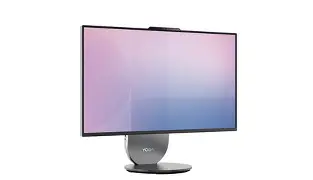
The Lenovo Yoga Aio 27 positions itself as a stylish, space-saving all-in-one that blends a large, high-resolution display with desktop-class performance. That combination is compelling for creatives, remote workers, and anyone who wants a tidy workspace without sacrificing screen real estate. But buyers frequently make avoidable mistakes when choosing a Yoga Aio 27 configuration or setting it up for everyday use. This article outlines the most common pitfalls, explains why they matter in real-world use, and provides clear, practical advice to avoid each mistake. The goal is to help potential buyers match the right configuration to their needs and avoid surprises after purchase.
Introduction: Who the Yoga Aio 27 is really for
The Yoga Aio 27 is most attractive to users who want a powerful desktop experience without a separate tower and monitor. Real-world users include content creators who need color-accurate screens, small-office owners who want a neat desk footprint, families that use one central computer for mixed-purpose tasks, and professionals who value an integrated system with less cable clutter. Understanding those use cases clarifies why some buying decisions make sense and others become costly mistakes.
Major buying mistakes—and how they show up in daily use
Mistake 1: Picking the wrong configuration for intended workloads
All-in-ones are sometimes marketed with a variety of CPU, GPU, and storage options. The most common mistake is underestimating the workload. In a household where the Yoga Aio 27 is expected to run photo editing, video timelines, or casual 3D work, choosing a model with only an integrated GPU and limited RAM will lead to sluggish exports, long render times, and choppy previews.
How it affects real use: a freelance photographer may find Lightroom library previews painfully slow; a part-time video editor will experience long export times on multi-minute 4K projects.
How to avoid it: Be honest about the heaviest tasks. For productivity, choose at least a mid-range CPU with 16GB of RAM. For serious photo/video work, prioritize discrete graphics and a faster storage drive (NVMe) and consider 32GB RAM if multitasking with large files is common.
Mistake 2: Overlooking display needs — resolution, color accuracy, and scaling
Buyers often assume a 27-inch screen is "big enough" and forget to check panel type, color coverage, and how the OS scales UI elements at high resolution. A sharp 4K panel with limited color calibration or sRGB coverage may not meet a designer’s standards, while a 4K screen without proper scaling settings can make text and UI elements too small for comfortable viewing.
How it affects real use: designers who expect accurate colors for client work discover mismatched prints; everyday users find themselves constantly changing scaling settings to make text readable.
How to avoid it: If color work is required, look for specifications that list sRGB, Adobe RGB, or DCI-P3 coverage and verify factory calibration or support for calibration tools. Test or confirm scaling behavior with the operating system—Windows scaling at 4K should be comfortable at 150% or 125% depending on eyesight and workspace distance.
Mistake 3: Assuming easy upgrades or internal access
All-in-one computers sacrifice modularity for integration. Many buyers assume they can upgrade RAM or storage easily later, only to discover components are soldered or require specialized disassembly. That assumption can lead to buying the wrong base model and later being unable to adapt performance without replacing the entire unit.
How it affects real use: running out of RAM when multitasking and discovering the unit can't be upgraded, forcing a costly replacement.
How to avoid it: Check the serviceability and upgradability before buying. Read the technical manual or product support pages to confirm whether RAM and storage are user-accessible or must be configured at purchase.
Mistake 4: Ignoring ports and connectivity for peripherals and workflows
Ports are crucial for users who connect cameras, external drives, colorimeters, and multiple displays. A tidy all-in-one loses its advantage if it requires constant use of hubs or is missing necessary ports like full-size HDMI, multiple USB-A, SD card readers, or Thunderbolt 3/4.
Find top-rated Laptops & Computers products at great prices.
Shop Amazon →How it affects real use: frequent file transfers are slowed because the only available ports are USB-C without adapters; photographers repeatedly swap SD card readers because there is no built-in slot.
How to avoid it: Make a list of all peripherals and connections to be used daily. Ensure the selected model supports the required ports natively or budget for a high-quality dock that supports power delivery and the needed I/O.
Mistake 5: Underestimating audio, webcam, and microphone quality
Some buyers expect laptop-level audio or assume webcam quality is sufficient for professional video calls. In practice, onboard speakers and webcams in all-in-ones vary widely; they can be excellent but are often optimized for casual use rather than professional streaming or podcasting.
How it affects real use: remote workers discover background noise is picked up during calls; creators must buy an external microphone and webcam for acceptable quality.
How to avoid it: If conferencing quality matters, test or check reviews for webcam resolution, microphone type and placement, and speaker output. Plan for external audio/video peripherals if professional-level meeting quality is required.
Mistake 6: Skipping noise and thermal testing
Integrating desktop hardware into a compact chassis requires careful thermal design. Buyers sometimes assume quiet operation but later report fan noise or thermal throttling under sustained loads.
How it affects real use: prolonged video exports lead to increased fan noise and reduced performance after thermal throttling kicks in.
How to avoid it: Read reviews that include sustained-load testing. Prefer configurations with efficient CPUs and adequate cooling, and avoid compact, high-TDP configurations if noise sensitivity is important.
Detailed product analysis: What to inspect before buying
1. CPU and GPU considerations
The right CPU/GPU balance depends on the workflow. For office work, web, and streaming, modern 6-core/8-thread processors or equivalent are ample. For content creation, prioritize higher-core-count CPUs and discrete GPUs to accelerate video rendering, GPU-accelerated effects, and machine learning-enabled features. Gamers or those doing real-time 3D work should verify the presence and class of discrete graphics.
2. Display quality and ergonomics
Look beyond resolution. Check color gamut, delta-E factory calibration, brightness (nits), and whether the stand provides tilt or height adjustments. For sitting at a desk with close viewing distance, higher pixel density improves clarity; for shared family use, consider comfortable scaling and viewing angles. Ergonomics matter because an AIO's fixed stand can be a dealbreaker if it doesn't allow the screen to sit at a comfortable height or angle.
3. Storage and memory
NVMe SSDs drastically shorten boot and app load times compared with SATA drives. For image/video workflows, prioritize larger and faster NVMe options, and consider a second internal drive only if the model supports it. For memory, 16GB is a practical baseline in 2026; 32GB is recommended for heavy multitasking or large media files.
Discover deals on Laptops & Computers — updated daily.
Shop Amazon →4. Built-in peripherals and extras
Sensors, fingerprint readers, webcams with privacy shutters, speakers tuned with premium audio partners, and bundled keyboards/mice affect the day-to-day experience. Reviewers often test the included wireless keyboard and mouse—if they’re low quality, replacement costs should be factored in.
5. Warranty, service, and support
All-in-ones can be harder to service locally compared to towers. Verify the warranty scope, on-site service options, and the availability of replacement parts in the buyer’s region. For small business use, consider extended support or next-business-day on-site service plans.
Pros & Cons
- Pros:
- Space-saving single-unit design with integrated large display
- Stylish, minimal cable footprint for neat workspaces
- Good base performance for productivity and light creative tasks
- Generally strong out-of-the-box display and audio for media consumption
- Often bundled with peripherals and a single power connection
- Cons:
- Limited internal upgradability compared to desktop towers
- Port selection on some SKUs may be insufficient for pro workflows
- Possible thermal constraints under sustained heavy workloads
- Some configurations lack the color accuracy required for pro creatives
- Repair and serviceability may be more expensive or slower
Comparison table: Choosing the right Yoga Aio 27 configuration
| Configuration | Best for | CPU class | GPU class | Typical display | RAM / Storage (recommended) |
|---|---|---|---|---|---|
| Value / Everyday | Web, office apps, video calls | Modern quad/6-core efficient CPU | Integrated graphics | QHD or 4K IPS, basic sRGB | 8–16GB / 256–512GB NVMe |
| Creator | Photo editing, light video work, design | 6–8 core high-performance CPU | Discrete mid-range NVIDIA-class GPU | 4K, higher sRGB/DCI-P3 coverage, factory calibrated | 16–32GB / 512GB–1TB NVMe |
| Power / Light Gaming | 3D work, casual gaming, heavier video timelines | 8+ core desktop-class mobile CPU | Discrete higher-tier GPU | 4K or high-refresh QHD | 32GB / 1TB NVMe + external storage |
Buying guide: Practical checklist and questions to ask
Step 1 — Define real-world primary use
Is the machine for single-user office tasks, a family entertainment hub, photo/video editing, or gaming? Prioritize CPU/GPU and RAM accordingly. If multiple uses are intended (e.g., a creator who also uses it for meetings), buy for the heaviest use case.
Step 2 — Confirm display needs
- Does the panel list percent coverage of sRGB, Adobe RGB, or DCI-P3?
- Is factory calibration included or supported by calibration tools?
- Check brightness (nits) if working in a bright room or with HDR content.
Step 3 — Inspect ports and expansion
- How many USB-A and USB-C ports are provided? Is there a Thunderbolt 3/4 port?
- Is there an SD card slot and full-size HDMI output/input?
- Will a dock be necessary? If so, ensure the AIO supports charging through the dock’s PD spec if needed.
Step 4 — Storage and memory planning
- Confirm if RAM and storage are user-upgradeable; if not, provision accordingly at purchase.
- Choose NVMe storage for speed—consider a larger primary drive or a secondary internal/external drive for media libraries.
Step 5 — Test or read tests for audio, webcam, and thermals
- Read third-party tests for sustained workloads and fan noise behavior.
- Test video call quality if possible; check for a physical privacy shutter if privacy is a concern.
Step 6 — Warranty, service, and peripherals
- Compare warranty lengths and on-site service options. For business use, consider extended support.
- Inspect the included keyboard and mouse—budget for replacements if they’re not ergonomic.
Step 7 — Placement, ergonomic setup, and desk measurement
Measure the desk and plan the position. AIOs reduce clutter but require proper viewing distance. Many users forget to check the stand’s tilt and height—consider adding a monitor arm or riser if the stand lacks adjustability and VESA support is not available.
Real-world scenarios: Matching configuration to common buyers
Freelance photographer
Needs: color-accurate display, fast storage for large RAW files, comfortable scaling for detail work. Recommended: Creator configuration with 4K panel (high sRGB/DCI-P3 coverage), 16–32GB RAM, and 1TB NVMe plus external backups.
Remote professional (meetings, spreadsheets, multitasking)
Needs: reliable webcam/mic, comfortable keyboard, crisp display for spreadsheets. Recommended: Value or mid-range configuration with 16GB RAM and attention to webcam and mic quality; consider an external microphone if often on client calls.
Small creative studio (photo + video)
Needs: discrete GPU for accelerated exports, ample RAM for timelines, and high storage. Recommended: Creator or Power configuration with discrete GPU, 32GB RAM, 1TB+ NVMe, and a fast external RAID or NAS for project files.
Family hub and media consumption
Needs: robust speakers, bright and vivid display, easy software updates. Recommended: Mid-range configuration with good speakers and a comfortable 4K display—prioritize user-friendly setup and parental control options if needed.
Setup tips after purchase
- Install all OS and driver updates immediately to get the latest thermal and power management fixes.
- Run a color calibration if doing creative work, or validate the factory profile with a colorimeter.
- Configure Windows scaling for comfortable text size on high-resolution displays before intensive use.
- Set the power profile to balance performance and noise; many users prefer a "balanced" setting for daily tasks and switch to "high performance" only for heavy workloads.
- Back up important data and consider a cloud or local NAS solution for large media libraries.
Conclusion
The Lenovo Yoga Aio 27 can be an excellent choice for users who want a near-desktop experience in a compact, elegant package. The most common post-purchase regrets stem from mismatching configuration to workload, overlooking display and port requirements, and assuming desktop-level upgradability. By defining real-world needs, verifying display and connectivity specs, planning storage and memory appropriately, and checking serviceability and thermals, buyers can avoid those pitfalls. With careful selection and setup, the Yoga Aio 27 can deliver a streamlined, high-productivity workspace that meets the demands of photographers, creators, professionals, and families alike.